
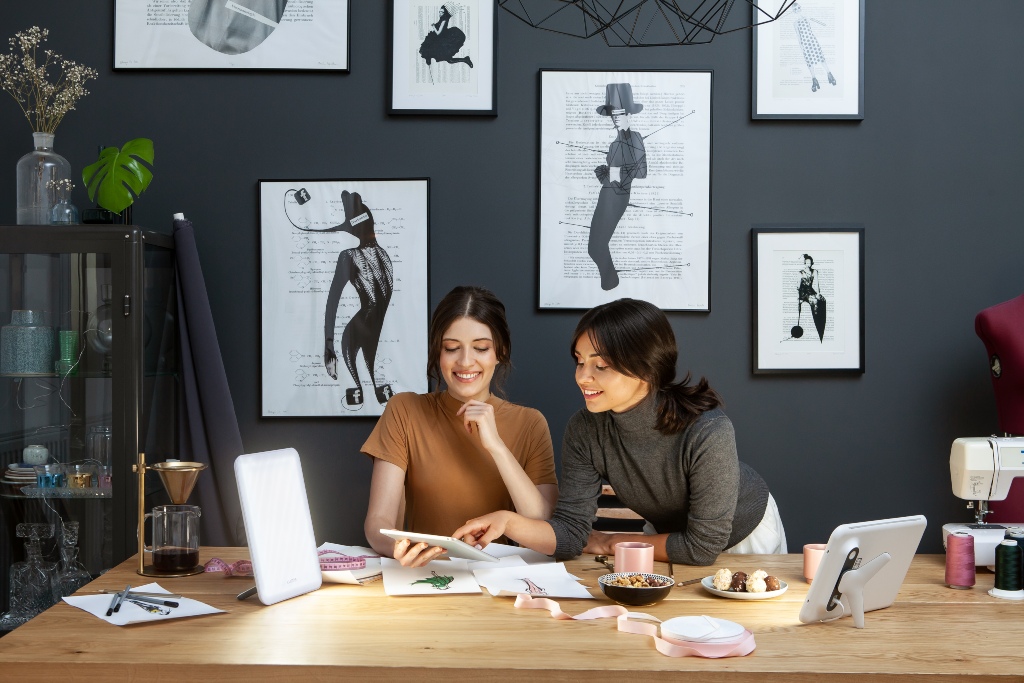
Bright light therapy is a first-line treatment for Seasonal Affective Disorder (SAD) and Winter Blues and is also considered an effective treatment for non-seasonal depression and bipolar disorder. It can be used to correct your body clock and sleep problems, help you adjust to new timezones or shift patterns and for a general energy boost. It is a safe, efficient and effective treatment for most people, but isn’t suitable for everyone, so you should always consult with your doctor before starting to use a SAD light of any type. If your doctor has given you the go-ahead to try bright light therapy, let’s answer some questions you might have, so you can choose the right light for you and get the most out of your therapy.
In this article, we’ll cover a lot of questions, so if there’s something particular you want to know, use the links below to get to that question quickly:
- Why use bright light therapy?
- What is a SAD light?
- Should I speak to my doctor before using a SAD light?
- Who are SAD lights not good for/any watch-outs?
- When should I use a SAD light?
- How do I use a SAD light?
- How long will it take for bright light therapy to work?
- Which are the best SAD lights to use?
- How much does it cost to buy and run a SAD light?
- Where can I buy a second-hand SAD light?
- Which are the most environmentally friendly bright light therapy devices?
- Does anywhere refurbish or fix SAD lights?
- How do I dispose of a SAD light?
- What are the drawbacks of bright light therapy?
- Can a SAD light boost my Vitamin D level?
- What other types of light therapy are there?
Just after some quick tips? Take a look at our handy printable guide to buying and using a SAD light.
Why use bright light therapy?
Our bodies understand what time of day it is by receiving light cues through our eyes. The light signals to a master clock in the brain that controls the clocks that are found in every other cell in our bodies. This helps the different parts of our body to know when to carry out different activities such as to sleep or wake up, eat, be active or rest. Light is of huge importance to our physical and mental health. It is only in the last 30 years or so that research has begun to focus on this area, and there are lots of exciting discoveries being made.
Before the invention of electric lights, we lived our lives according to day/night cycles and would only have had access to firelight after sunset. We have gone from being hunter-gatherers to agriculture workers, to the industrial age, spending less time outdoors and we now spend 90% of our time indoors. Now, we have the means to manipulate our environments and can make it seem like daylight in the middle of the night. While this might be desirable for our lifestyles, our bodies are still stuck in the stone age and haven’t adapted yet to how we live our lives in the modern age.
When we’re indoors all day under a consistent level of light, it’s difficult for our brain to figure out what time of day it is. General lighting in homes tends to be around 100-300 lux (a measure of light intensity) and in offices around 300-500 lux. Outdoors on a clear spring morning the light level would be around 10,000 lux and on a sunny summer afternoon, it can be 100,000 lux.
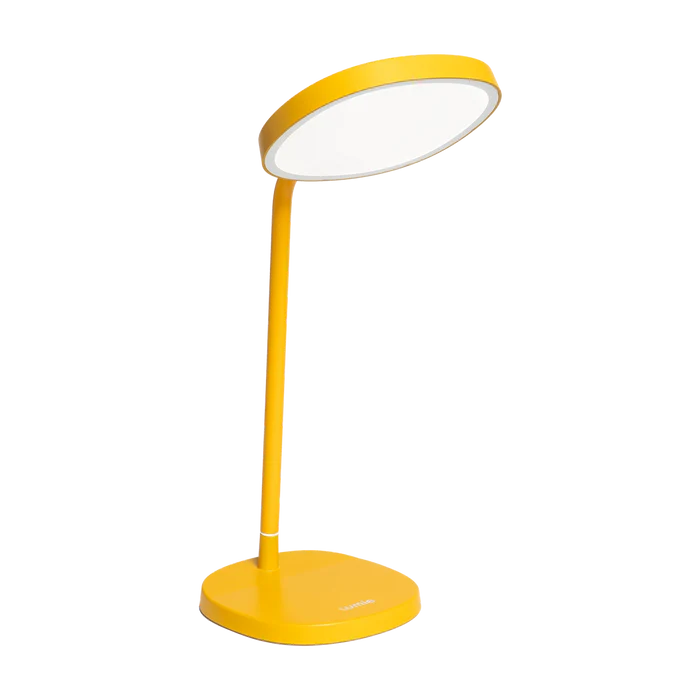
The best thing that we can do is get out into natural daylight in the morning and throughout the day if possible. Being near windows or doors that let in natural light is also helpful to allow our body to sync itself with the day-night cycle. Avoiding intense light and light rich in the blue part of the spectrum at night and keeping our sleeping environment dark also helps with this.
Sometimes it isn’t possible for us to get as much natural light as we might need. Our modern lifestyles can make it difficult in the winter months to see any daylight. Dull days can limit the amount of light we get too. If we experience Seasonal Affective Disorder (SAD) then we might need more light than others. Bright light therapy devices can be a useful supplement or replacement when we don’t get enough natural light for any reason.
Bright light therapy can also be used to help with challenges we might experience with shift work, jet lag and sleep problems. This kind of intense light delivered at the right time can help shift our body clock so we can sleep and wake when we need to, or adjust to a new time zone .
What is a SAD light?
SAD lights (sometimes known as SAD lamps/light boxes/energy lights) are the most common type of bright light therapy device. They are very bright lights that simulate the level of light you would get on a clear spring morning, which is full-spectrum white light. The devices are specially-made with filters for UV light so that you don’t damage your skin or eyes.
Light intensity is measured in lux. The industry standard is for a SAD light to deliver 10,000 lux at a comfortable distance, although the minimum recommended for treatment is 2,500 lux. Normal light bulbs, or even ‘daylight bulbs’, are not strong enough to treat SAD – 10,000 lux is roughly 20 times brighter than a well-lit office.
Should I speak to my doctor before using a SAD light?
While bright light therapy is safe and helpful for many people, it is recommended that you check with your doctor before starting to use a SAD light. Even if you are pretty convinced you are experiencing Seasonal Affective Disorder or Winter Blues, non-seasonal depression or bipolar disorder, your doctor will want to check for and rule out other conditions that might be causing your symptoms.
Light therapy is not suitable for everyone, so your doctor will want to discuss this treatment option with you and make sure it’s safe for you to use a SAD light. Ideally, your doctor will supervise your light therapy when you first begin, having regular check-ins with you to see how you are doing with it.
I know from personal experience and speaking with many other people that this is the ideal, and not necessarily what happens! The section below will hopefully help you understand why it’s recommended to speak with your doctor. But of course, it is up to you to decide. Whatever you decide, as you begin using a device, pay attention to how you feel, and flag any issues with your doctor.
Who are SAD lights not good for/any watch-outs?
Bright light therapy might not be suitable for you, or you might need more careful supervision and additional treatments with it, if any of the following apply to you:
- You have existing eye problems such as macular degeneration, cataracts, glaucoma or retinitis pigmentosa
- You have conditions that make your eyes or skin more sensitive to light (photosensitive) such as diabetes, herpes, lupus or a history of skin cancer
- You take medications or remedies that make you more sensitive to light, for example, certain antipsychotics and antibiotics, or the popular herbal supplement St John’s Wort
- You experience Seasonal Affective Disorder with a bipolar presentation (you have a pattern of becoming depressed in some seasons and switch to hypomania or mania episodes in others), or non-seasonal bipolar disorder
If you experience any side effects such as headaches, nausea, dizziness, irritability, or feeling ‘wired’ (like you’ve had too much caffeine), they will usually be mild and go away quickly after you stop using the light. You could try building up your treatment time in 5-10 minute blocks, or sitting slightly further away and using it for a bit longer. Be guided by how you feel.
The main concern that doctors and researchers have had with using light therapy for people with bipolar disorder depression (with or without seasonal pattern) is that they may switch states into hypomania or mania. Research suggests that using a mood-stabilising pharmaceutical together with light therapy can be very effective and used in this way, rates of switching states are low and much less than antidepressant medication.
If you and your doctor decide to try light therapy, they will need to make sure you begin with a mood stabiliser for a couple of weeks before starting light therapy and build up gradually. They will need to make sure that you have regular reviews. It can be helpful for everyone if a family member or friend can be briefed to watch out for any switch into a manic state and to inform your doctor immediately if this happens.
When should I use a SAD light?
For most people, SAD lights have their best effect when used in the morning, within two hours of waking up. Some people like to have a ‘top-up’ in the early afternoon if their energy or mood is flagging. Shift workers would use it when they wake.
Usually, you wouldn’t use a standard SAD light in the evening for at least the three hours before you want to go to sleep because the light energises you. However, some manufacturers are starting to make SAD lights that add more red and can dim down in the evening, so you have a more versatile light that helps you to wake up and be energised in the morning and to wind down for sleep in the evening. An example is the Lumie Halo.
For the best effects for people with Seasonal Affective Disorder, most people start to use their SAD light in the autumn months, when they begin to notice the early symptoms of SAD creeping in. Lowering energy levels and increased sleepiness, struggling to get up in the mornings and irritability are often early indicators for many people.
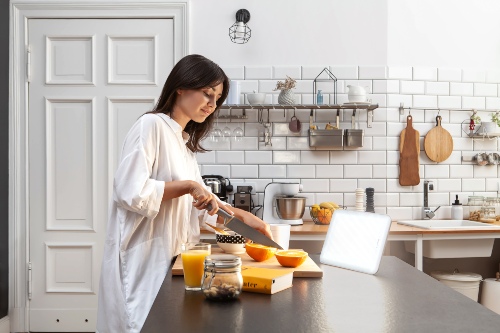
From this point, it is recommended to use your light as many days as you can, at the same time each day until spring. If you don’t use it, the symptoms will usually return within a few days. However, be guided by how you feel – you’ll get used to tuning in and knowing if you need to use it. If there’s a bright spell for a few days or you’re spending more time than usual outdoors, you might feel you don’t need it for those days. You might also find that you want to use a SAD light through dull spells at other times of the year, or if you’re working in very poorly lit or windowless environments.
For people with non-seasonal depression or bipolar disorder, your doctor will guide you when to use your SAD light. For depression, it would normally be as soon as you notice symptoms and for bipolar disorder depression, you would need to start mood stabilising medication first before you can start using a SAD light (if you’re not already taking one). Your doctor may advise you to use the light closer to midday as some research has shown this to reduce the risk of switching states, while others have shown morning use is fine.
The basic guidelines are a starting point. There has been a lot of research into bright light therapy, but the studies often use different methodologies, so it is difficult for anyone to give exact personalised recommendations.
Added to this, you’re an individual with your own biological make-up, spending time in different environments in different ways. You can get to know your own individual light nutrition needs by paying attention to how you feel and making adjustments to your light therapy until you find what works well for you.
Be prepared to experiment and be flexible because you’re working with changing factors – some days are duller than others; you might change your routine or the environments you spend time in; you might be experiencing more stress or not getting outdoors as much due to a hectic schedule. There are also many other environmental, behavioural and mindset changes you can try that will support your wellbeing – I call this living light nutrition.
How do I use a SAD light?
Position your light around 30 degrees (imagine 11 o’clock or 1 o’clock) at the distance recommended by the manufacturer of your light and switch it on. You can do other activities, like eating, reading, crafting, working or watching TV while you’re having your light treatment. You don’t look directly into the light, it just needs to reach your open eyes.
Please ignore any stock photos you see of people sitting or lying like they’re on a sun lounger in front of a SAD light with closed eyes – you definitely need your eyes open! You can wear prescribed glasses or contact lenses, but don’t wear tinted lenses unless advised by your doctor/optometrist that you should, and don’t wear sunglasses or blue light blocking glasses while you have your treatment. Reactive lenses that tint in reaction to light will affect the light reaching your eyes, too. It may be best to take them off while you have treatment, or use a non-reactive pair of glasses during treatment if possible.
The manufacturer of your light will give you an idea of typical treatment time; for example, the strongest and largest commercially-available lights are generally 10,000 lux and take 20-30 minutes at 35-55cm as a starting point. However, if you have bipolar disorder with or without seasonal pattern your doctor may advise you to build up to this. This is to prevent you from switching states into hypomania or mania. They will usually want to start you on a mood stabiliser before you begin light therapy.
If your light has settings that allow you to use it at different intensities you can select a lower level and have a longer treatment. You can also put your light further away if you prefer that, and have a longer treatment time. Lux drops off significantly the further away you place your light, so if you find you’re not getting enough treatment effect, then try moving your light closer if possible, or you may need longer. You can download a free lux meter app on a smartphone and that can help you understand how much light you’re getting and whether you have your light close enough. For an effective treatment for SAD, you need at least 2,500 lux.
How long will it take for bright light therapy to work?
Most people will start to feel better (more energy, improved mood) within two weeks. Many people feel better after only one or two sessions. If it takes longer for you, don’t worry! If you’re not finding the light therapy helpful, try some of the tips here or call the manufacturer for some advice.
If you still find that light therapy doesn’t work for you, try not to lose hope; your doctor will be able to recommend other treatment strategies, such as cognitive behavioural therapy (CBT), antidepressant medication and lifestyle changes. You could also prioritise getting outdoors into natural light more, since you can’t supplement the light. You may need to self-advocate with eg an education provider or employer to facilitate this.
Which are the best SAD lights to use?
I’ll answer in more depth below, but if you’re after a quick starting point, Lumie Brazil and Lumie Vitamin L are both Class IIa certified medical devices from a specialist brand, have thousands of positive reviews, and they are the two bright light therapy devices I use myself.
If you opt for Lumie Brazil, I would advise buying six replacement bulbs at the same time, to see you through the next decade. This is because making new fluorescent lights is now banned in the UK, and you can only buy existing stocks, so they will become harder, and then impossible to buy.
So with that brief answer given, the fuller answer is that the best SAD light for you is the one that fits your lifestyle and preferences best, as well as what you are using the light to do. You might even want more than one for different environments.
For all lights, check that they have the relevant quality marks for your market (in England, Scotland and Wales from 1 January 2021, UKCA replaced CE for new products). For Northern Ireland it continues to be CE. They should always have a UV filter and the manufacturer should state the distance at which you receive the light intensity (e.g. 10,000 lux at 30cm).
I personally use and recommend buying direct from Lumie – they have been light therapy specialists since 1991, have a long history of research and development in light therapy products, offer trial periods when you buy directly from them and good warranties for all products.
For full transparency, I have used their products since 2004, and I currently have a Lumie Brazil, a Lumie Vitamin L and the Lumie Bodyclock Glow 150 wake-up light alarm clock. I have owned other models of their products in the past, and any I have replaced have been upgrades rather than the products breaking – I have passed on my older models to family and friends. I don’t currently have any commercial agreements with Lumie and Make Light Matter doesn’t either, but they did supply some lights for me to use for events several years ago. I continue to value their work, and they have been supportive of mine.
Treating SAD?
If you have Seasonal Affective Disorder with or without a bipolar presentation, then you may need to use the light most days for about five months of the year when you would usually experience depressive symptoms. A fast treatment time might be your priority and it is more important for you to get proper treatment, as you’re not just using the light for a general energy boost.
Ideally, look for a product that is labelled as a Class IIa medical device, which means it has been clinically tested for use in managing SAD. These devices are also zero VAT rated in the UK if you confirm that you or the person you’re buying for has SAD.
SAD researchers recommend a large box with full-spectrum (white light) fluorescent tubes because these are the type that they have done the most research on and have been shown to be the most effective and safe. The best large lights will allow you to get 10,000 lux at a comfortable distance (30-55cm). Their size means that small movements of your head won’t disrupt your treatment, unlike with some smaller LED lights. They can also be more comfortable from a glare perspective because you’re not trying to get a narrow beam of light to reach your eyes; it’s a much broader spread of light.
Lumie Brazil is a good example.
Need portable bright light therapy?
As LED technology has progressed, manufacturers have started to incorporate it into their SAD lights, and soon LED will be the only option available in the UK. There is a little research that shows that LED can provide effective bright light therapy, and growing positive reviews from consumers.
LED SAD lights are sometimes known as beam devices. These are usually smaller, lightweight and use less energy. If space or portability is important to you, you’re treating the milder Winter Blues form of SAD, just wanting an energy boost or to help with jet lag, then these might be ideal for you. They can also be great to use as secondary lights if you normally use a large fluorescent light at home and need to travel, or want a second light at work for top-up treatments. If you are concerned about the environment or energy costs, they can also be a better option for you.
As with all lights, you will need to follow the manufacturer’s recommendations on the distance to put your light at to get the full light intensity (e.g. 10,000 lux at 16cm). Steer clear of any that don’t state this in their advertising.
I have seen some LED SAD light descriptions that say they give you 10,000 lux at 10cm, which is less than the length of my thumb to my wrist for some context. For most people, this would be impractical and uncomfortable, so you would put the light further away. This would mean you need a longer treatment time than stated. With LED devices, you also need to be a bit more careful with their placement and to keep your eyes in the same place where the light is reaching them – turning your head might mean that the light isn’t properly reaching your eyes.
I bought a gooseneck tablet holder to attach to my bed headboard – it allows me to get the Lumie Vitamin L up closer towards my eyes and in front of my face, rather than it being beside me on the bedside table, where I’d have to twist around towards it. This allows me to have a quicker treatment time first thing in the morning while I enjoy a cup of tea in bed.
On a table, it will naturally be further away from my eyes than the recommended treatment distance and therefore need more time. If I have plenty of time, it is more comfortable to have the light further away and use it for longer. C-shaped sofa tables can also be useful to enable you to get lights closer to you.
Some manufacturers will state that their LED lights are ‘blue-enriched’. LED lights do have more of the blue part of the light spectrum than fluorescent, halogen or incandescent bulbs. If they have further enriched the blue, they can reduce the lux level (intensity) of the light and still get a good effect. This is because the blue part of the spectrum (around 460-480 nm) is shown to be the most effective at suppressing melatonin. This is the hormone that makes you sleepy and keeps you asleep, and it also boosts the neurotransmitter and hormone serotonin (has lots of functions including mood regulation), and cortisol (a hormone that helps you feel alert).
Some manufacturers have even produced blue-only lights – these are not recommended in a Yale study of commercially-available lights in the USA, due to concerns about the potentially damaging effects of too much blue light on the eyes. Full-spectrum white light has the most research into its safety and effectiveness.
There are also other formats of bright light therapy available that you could consider, such as a visor, glasses or headsets. I don’t personally have experience of using these, and there is less research on their effectiveness due to them being newer product categories, though consumer reviews suggest that some people find them effective. If you would find it helpful to be able to move around while you get your treatment, why not give them a try and see how you get on?

In the last few years, Derek Antosiek, Founder of Optimize Your Biology has been conducting his own tests of any lights he can get his hands on in America – he’s doing great work and his website is a goldmine of information! You can check out his database of light therapy lamps, which is growing all the time – he gives you the lowdown on all sorts of metrics and has a consistent way of testing, so it’s like-for-like. Although some of the lights won’t be readily available in the UK, some are, and it’s fascinating work regardless. I also like that he’s exploring the circadian light measure as an alternative to lux.
How much does it cost to buy and run a SAD light?
Prices vary hugely for a SAD light and the market has been flooded with products in the last few years. It can be difficult as a consumer to know whether a £25 LED light is going to do the same job for you as a £200+ fluorescent light.
For a quality light box that is an approved Class IIa medical device and has been clinically tested, you can expect to pay around £100 to £220 or more at full price – though you can usually find good discounts in sale periods.
If you have a light with fluorescent bulbs, they will need replacing every few years, depending on how much you use the light, and they’ll be around £15 each. Unlike in the past, if you’re going to buy one now, you should also buy a stock of replacement bulbs because it is now illegal in the UK to produce new fluorescent lights. Retailers can only sell the remainder of their existing stock.
Energy-wise, even the most powerful fluorescent light box I know of (the SAD Lightbox Co. Diamond 5 that uses five 36W tubes and takes 20 minutes for treatment at 55cm) will use just £2.50 for the year based on 152 treatment days. A 3 x 36W box like the Lumie Brazil, used for 30 minutes at 35cm will use £2.27. This is based on 27.69p per KWh – the UK average electricity unit rate per KWh from Jan to Mar 2026.
You can work out the rough cost of light therapy per treatment day, which is how I think of this investment.
So, for example, the Class IIa medical device Lumie Brazil costs £219 if bought at RRP. It’s a good quality product that will likely last you 10 years at least. Say that you need to replace the tubes a couple of times at £15 a tube (3 tubes x £15 x 2 times) = £90. You use the light every day for 30 minutes five months of the year (typically how long SAD lasts) = 152 days a year or 1,520 days in a decade. The product is £309 in total and you spend £2.27 for the first year in energy and anticipate a 10% increase each year (£36.18 in a decade). Over a decade, the total cost is £345.18, which averages out at £0.23 per treatment day.
In your first year, the initial cost of the light and a stock of replacement bulbs makes it more expensive per treatment day, but this drops over the 10 years. I have illustrated this in a table, which I hope you’ll find helpful:
| Year | Products bought | Cost for products | Cost for energy (with 10% increase each year) | Year total cost | Year cost per treatment day (152 days) | Total running cost since start | No. of treatment days since start (152/year) | Total running cost per treatment day since start |
| 1 | Lumie Brazil light plus replacement tubes x 6 | £309 | £2.27 | £311.27 | £2.05 | £311.27 | 152 | £2.05 |
| 2 | £2.50 | £2.50 | £0.02 | £313.77 | 304 | £1.03 | ||
| 3 | £2.75 | £2.75 | £0.02 | £316.51 | 456 | £0.69 | ||
| 4 | £3.02 | £3.02 | £0.02 | £319.54 | 608 | £0.53 | ||
| 5 | £3.32 | £3.32 | £0.02 | £322.86 | 760 | £0.42 | ||
| 6 | £3.66 | £3.66 | £0.02 | £326.51 | 912 | £0.36 | ||
| 7 | £4.02 | £4.02 | £0.03 | £330.54 | 1,064 | £0.31 | ||
| 8 | £4.42 | £4.42 | £0.03 | £334.96 | 1,216 | £0.28 | ||
| 9 | £4.87 | £4.87 | £0.03 | £339.83 | 1,368 | £0.25 | ||
| 10 | £5.35 | £5.35 | £0.04 | £345.18 | 1,520 | £0.23 | ||
| Totals | £309 | £36.18 | £345.18 |
How about an LED example? For the Lumie Vitamin L – which is also a Class IIa medical device, it is £106.33 for the decade, or an average of £0.07 per treatment day.
| Year | Products bought | Cost for products | Cost for energy (with 10% increase each year) | Year total cost | Year cost per treatment day (152 days) | Total running cost since start | No. of treatment days since start (152/year) | Total running cost per treatment day since start |
| 1 | Lumie Vitamin L | £99 | £0.46 | £99.46 | £0.65 | £99.46 | 152 | £0.65 |
| 2 | £0.51 | £0.51 | £0.00 | £99.97 | 304 | £0.33 | ||
| 3 | £0.56 | £0.56 | £0.00 | £100.52 | 456 | £0.22 | ||
| 4 | £0.61 | £0.61 | £0.00 | £101.13 | 608 | £0.17 | ||
| 5 | £0.67 | £0.67 | £0.00 | £101.81 | 760 | £0.13 | ||
| 6 | £0.74 | £0.74 | £0.00 | £102.55 | 912 | £0.11 | ||
| 7 | £0.81 | £0.81 | £0.01 | £103.36 | 1,064 | £0.10 | ||
| 8 | £0.90 | £0.90 | £0.01 | £104.26 | 1,216 | £0.09 | ||
| 9 | £0.99 | £0.99 | £0.01 | £105.25 | 1,368 | £0.08 | ||
| 10 | £1.08 | £1.08 | £0.01 | £106.33 | 1,520 | £0.07 | ||
| Totals | £99 | £7.33 | £106.33 |
If you want to do your own calculations, you can use my SAD light and dawn simulator cost calculator spreadsheets – simply download and save a copy then plug in your own figures based on actual costs for your product and energy unit prices.
I know that the initial outlay can put many people off getting a SAD light – it can feel like a risky investment if you don’t know if it’s going to work for you. Read a few reviews, and you’ll see many people saying they wish that they had bought one sooner, rather than continuing to suffer with SAD symptoms year in, year out. This is why some manufacturers will offer you a money-back guarantee. For example, in the UK, if you buy direct from Lumie, they give you 45 days to try the product and you can return it if it isn’t suitable for you. You may also be able to pay in three instalments with Klarna where this is offered.
Alternatively, you could try buying a second-hand SAD light and then the investment will be less. However, bear in mind if you buy a fluorescent light that you may need to buy some new bulbs, which could make it less cost-effective to buy second-hand.
Where can I buy a second-hand SAD light?
Second-hand, used SAD lights are sold on Ebay, Gumtree, and Facebook marketplace.
Which are the most environmentally friendly bright light therapy devices?
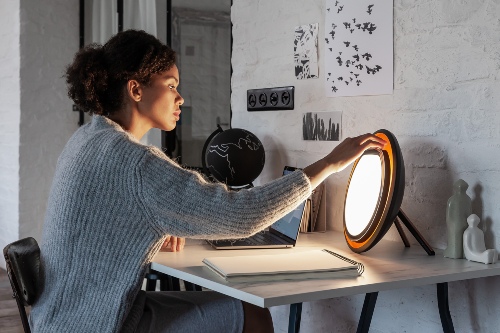
LED lights win hands down on environmental considerations. They will use less energy than fluorescent lights and are often smaller, so lighter to deliver with fewer deliveries needed. You also don’t need to replace tubes, so they don’t need to be stored. At the end of their life, some LED lights can be recycled, where the facilities exist.
The UK Government has now banned the sale of fluorescent bulbs, with a phase-out period where retailers are allowed to sell existing stocks only. This decision has been driven by environmental concerns – particularly that fluorescent bulbs contain small amounts of mercury. If the bulbs aren’t disposed of correctly, mercury can leak, and this is damaging to the health of organisms, including humans.
Does anywhere refurbish or fix SAD lights?
Lumie sometimes offer refurbished lights at a discount and with their same warranty and trial period. Your manufacturer may fix lights under warranty – check your paperwork. For older lights, I am not aware of any specific company that will repair a SAD light. You could try your local small electrical repair shop.
How do I dispose of a SAD light?
If your light can’t be fixed or it isn’t economical to do it then you will need to dispose of it properly according to the Waste Electrical and Electronic Equipment (WEEE) guidance. You will also need to dispose of any bulbs using the same guidance. You can usually do this at your local household recycling centre, where they will have clearly marked areas. Check Recolight for your nearest centre and helpful advice.
What are the drawbacks of bright light therapy?
Bright light therapy for most people is a safe, effective treatment. It won’t be suitable for everyone, though, which is why you should ideally check with your doctor before starting to use a SAD light or any other form. Some of the drawbacks for people who do use it can include:
- If you’re using it to treat SAD, you may need to use light therapy most days from the time your symptoms usually start until they usually go away – if you don’t use it, or get enough natural daylight, your symptoms can return quickly.
- You will need to consider how to fit your light treatment into your daily routine, which can be challenging if you don’t have much routine, find it difficult to stick to one, or you have to leave home very early and don’t want to get up any earlier.
- Some people find that they start to feel negatively towards the light therapy routine, or the SAD light itself – like they’re ‘shackled to this box’.
- SAD lights aren’t currently available on the NHS in the UK – some people are unwilling to risk the investment for something they don’t know will work for them – and some people can’t afford to pay for a light themselves.
You may be able to overcome some of these with planning, considering where and when you’ll use your light. This might determine your choice of light therapy device. What will you do while you have your therapy? What will you do if you travel? Could you use a light at work?
You might find it helpful to consider your light treatment as self-care or ‘me-time’ and use the time to catch up on your favourite YouTube or podcast creators, do some reading, gaming, crafting, manicure your nails, journalling or other personal development, for example. Or you can do work – catch up on emails, plan your day, read industry news, make calls, or do some professional development.
If the cost or risk of buying a light and it not working for you are concerns, some SAD light manufacturers offer a money-back guarantee, which allows you to try the light out and return it if it doesn’t help you. You might also be able to pay in instalments, or buy a second-hand light. Some libraries are beginning to loan SAD lights or provide access to them within the library. You could also check with friends, family or colleagues if anyone has a light you could share or borrow for a few days to see what you think.
If light therapy isn’t for you for any reason, see what you can do to increase the amount of access to daylight you have – ideally by getting outdoors, but if you can’t manage that, then being near windows.
Can a SAD light boost my Vitamin D level?
That would be great, but no, unfortunately a SAD light can’t help you to avoid the Vitamin D deficiency that many of us experience in the UK’s autumn and winter months. All medically-approved SAD lights filter out UV light. You can get Vitamin D through your diet (oily fish, egg yolk, red meat, liver, fortified foods) and by taking a supplement from October to March when we don’t get enough Vitamin D from the sun in the UK.
What other types of light therapy are there?
You can also get bright light therapy in the form of a visor, or glasses that you wear, so you can move around while receiving your treatment. I haven’t tried these personally yet, but consumer reviews suggest that some people find them effective.
Also, the HumanCharger® (formally Valkee) was launched in 2007. This headset delivers light to the brain through your ears. The company recommends the headset for general energy, helping with jetlag and Winter Blues, but doesn’t claim to be able to treat SAD. I haven’t had any feedback from anyone who has used one of these, and the limited independent research on them has been mixed to sceptical so far.
You may also have heard of or seen dawn simulators or wake-up lights. These are alarm clocks that wake you up with a gradually increasing light that is designed to simulate a sunrise. Their light intensity is not enough to treat SAD, but they are useful for helping anyone to get up in the mornings (or other times if you do shift work).
There are also more lights emerging that are marketed as being ‘circadian lights’, ‘human-centric’ or ‘full spectrum’ – designed to automatically change the quantities of different colours in lights to support our circadian rhythm across the day. They will have more blue during the day, before reducing blue and increasing red as evening progresses.
Other types of light therapy that use different parts of the light spectrum have been emerging rapidly in recent years. The wider health and beauty benefits of light is an exciting area of research that is sparking a lot of investment in new products to help treat skin conditions, remove hair, reduce pain and inflammation, reduce ageing and enhance the look of skin.
Although anecdotally some people (myself included in the early 2000s!) have used tanning beds and booths to help manage some SAD symptoms, this is not recommended. It carries the risk of exposing your skin and eyes to harmful levels of UV light, with developing skin cancer a major concern. Medically certified SAD lights filter out UV light.
Being outdoors in natural sunlight has a range of benefits with responsible exposure – this includes warding off SAD and lifting mood and energy, producing Vitamin D in exposed skin when the UV index is 3 or more, preventing sight deterioration, and near-infrared stimulating the metabolic system, among others. But overexposure to sunlight is risky – burning your skin and looking directly into the sun with unprotected eyes should be avoided.
Anything else?
I hope that you have found this article helpful, but as always, I welcome your feedback and comments. Is there something that you wanted to know that isn’t answered here? You can email me or use the Helpful? feedback buttons which will allow you to provide comments.
Image credits and notes
Thank you to Lumie for providing images of some of their products for our use. We don’t have a commercial relationship with Lumie, but the team has been very supportive of Neina’s work over the years as Little Light Room and Make Light Matter.
Comments are closed.